
Blog
Pneumatic Actuator Guide: Understanding Pneumatic Actuator Functionality
11 May 2026
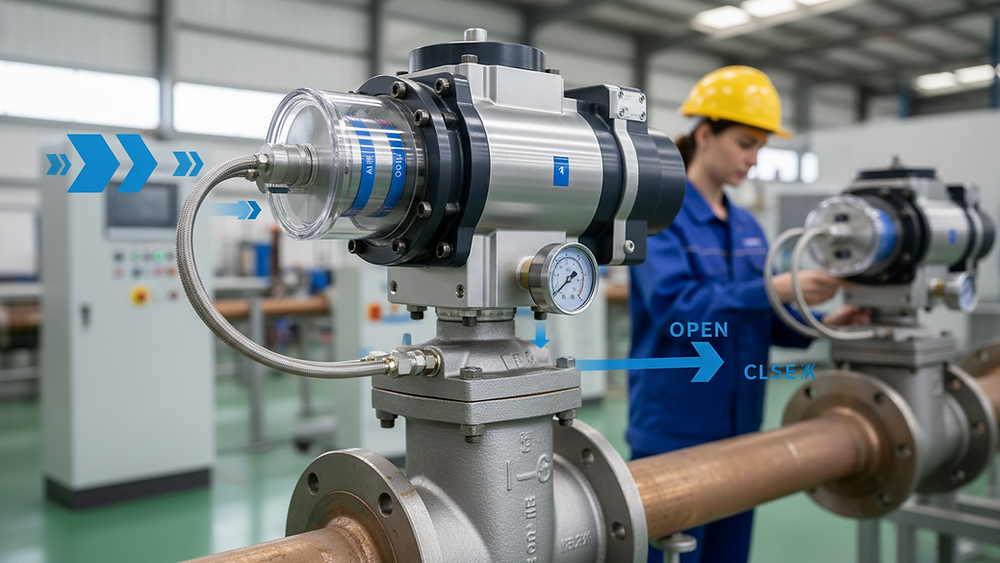
When it comes to controlling valves in industrial and residential settings, understanding how actuators work is essential. Pneumatic actuators are a popular choice across many sectors, including oil and gas, chemical processing, water treatment, power generation, and food and beverage. Their reliability, speed, and power make them indispensable in many applications. In this guide, I’ll walk you through the basics of pneumatic actuator functionality, share some practical insights, and offer comparisons that can help you make informed decisions.
What Is a Pneumatic Actuator? A Practical Guide
A pneumatic actuator is a device that converts compressed air into mechanical motion. This motion is then used to operate valves, dampers, or other mechanical devices. The beauty of pneumatic actuators lies in their simplicity and efficiency. They use air pressure, which is readily available in most industrial environments, to create linear or rotary motion.
Here’s a quick breakdown of how they work:
- Air Supply : Compressed air is fed into the actuator.
- Conversion : The air pressure pushes against a piston or diaphragm.
- Motion : This pressure moves the piston or diaphragm, creating mechanical movement.
- Valve Operation : The mechanical movement opens or closes the valve.
One of the key advantages of pneumatic actuators is their ability to provide fast and powerful motion with minimal maintenance. They are also safer in hazardous environments since they don’t rely on electricity.
Pneumatic Actuator Guide: Types and Applications
Understanding the different types of pneumatic actuators can help you select the right one for your needs. The two main types are:
- Linear Pneumatic Actuators
- Rotary Pneumatic Actuators
Material Considerations for Valves and Actuators
When selecting actuators and valves, material compatibility is crucial. For example:
- Stainless Steel : Excellent for corrosive environments such as chemical processing or food and beverage industries.
- Carbon Steel : Suitable for general industrial use but less resistant to corrosion.
- Aluminium : Lightweight and cost-effective, often used in pneumatic actuator bodies but less durable in harsh environments.
- Brass : Common in water treatment applications due to its corrosion resistance.
Choosing the right material can extend the life of your equipment and reduce maintenance costs. For instance, pairing a stainless steel valve with a pneumatic actuator made from aluminium might save costs but could lead to faster wear in corrosive environments.
What Are the Three Actuators?
In the world of automation, three primary actuator types dominate:
- Pneumatic Actuators
- Electric Actuators
- Hydraulic Actuators
Each actuator type has its strengths and weaknesses. Pneumatic actuators excel in speed and simplicity but may lack the fine control of electric actuators. Hydraulic actuators provide immense power but require more complex maintenance.
Practical Tips for Selecting Pneumatic Actuators
Selecting the right pneumatic actuator involves more than just picking a size. Here are some practical tips:
- Match Actuator Torque to Valve Requirements
Calculate the torque needed to operate your valve under all conditions, including pressure and temperature variations.
- Consider Air Supply Quality
Clean, dry air extends actuator life. Use filters and dryers to maintain air quality.
- Evaluate Duty Cycle
How often will the actuator operate? High-frequency cycles require more robust designs.
- Check Environmental Conditions
For outdoor or corrosive environments, choose actuators with appropriate coatings or materials.
- Look for Fail-Safe Options
Some pneumatic actuators come with spring-return mechanisms that automatically close or open valves in case of air supply failure.
Unexpected Facts About Pneumatic Actuators
Here are some nuggets that might surprise you:
- Pneumatic actuators can operate in explosive atmospheres because they don’t generate sparks, unlike electric actuators.
- They can be surprisingly quiet when fitted with silencers on exhaust ports, which is important in noise-sensitive environments.
- Air consumption can be optimized by using positioners and smart control systems, reducing operational costs.
- Pneumatic actuators have been around for over a century , evolving from simple mechanical devices to sophisticated components integrated with digital controls.
Understanding these facts can help you appreciate the versatility and ongoing innovation in pneumatic actuator technology.
Enhancing Valve Performance with Pneumatic Actuators
Pairing the right valve with a pneumatic actuator can significantly improve system performance. For example:
- Ball valves with pneumatic actuators offer quick quarter-turn operation, ideal for on/off control.
- Butterfly valves combined with pneumatic actuators provide a lightweight, cost-effective solution for large diameter pipes.
- Globe valves with linear pneumatic actuators allow precise flow control in process industries.
When specifying valves and actuators, consider the entire system’s requirements, including pressure, temperature, flow rate, and control precision.
Final Thoughts on Pneumatic Actuator Functionality
Understanding how pneumatic actuators function and their applications can empower you to make better decisions for your projects. Whether you’re managing a water treatment plant or overseeing chemical processing, the right actuator can improve efficiency, safety, and reliability.
If you want to explore more about pneumatic actuators , their types, and how they can fit into your operations, I encourage you to dive deeper into the specifications and consult with experts who can tailor solutions to your needs.
Choosing the right actuator is not just about functionality but also about long-term value and operational excellence. With the right knowledge, you can ensure your systems run smoothly and efficiently for years to come.
Need help specifying valves or actuators? Contact Valves4You Ltd with your project details and the team can advise on suitable product options.